
Many UK businesses generating £2 million+ annually struggle to meet sales targets despite significant effort and investment. Generic training programs and one-size-fits-all strategies often fail to deliver consistent growth or help teams hit quarterly targets. This guide reveals five data-driven, tailored approaches that can accelerate sales performance and drive sustainable revenue growth for mid-sized UK companies.
Table of Contents
- Selection Criteria For Choosing Sales Improvement Strategies
- 1. Data-Driven Sales Goal Setting
- 2. Bespoke Sales Training And Coaching
- 3. Sales Process Optimization
- 4. Incentive Alignment And Motivation
- 5. Ai Integration In Sales Coaching
- 6. Summary Comparison Of Sales Performance Improvement Methods
- 7. Situational Recommendations For Sales Leaders
Key Takeaways
| Point | Details |
|---|---|
| Selection Matters | Choose methods aligned with your company size, resources, CRM maturity, and growth goals for maximum impact. |
| Five Core Methods | Data-driven goal setting, bespoke coaching, process optimization, incentive alignment, and AI integration each deliver measurable improvements. |
| Tailored Implementation | Match strategies to your specific challenges: vague targets need SMART goals, inconsistent performance requires coaching, long cycles demand process fixes. |
| Combined Approach | Integrating multiple methods creates compounding benefits for sustained 50%+ annual growth. |
Selection Criteria for Choosing Sales Improvement Strategies
Before investing in any sales improvement initiative, UK mid-sized businesses must evaluate options against clear criteria. The right method depends on your current situation, not industry hype.
Start by assessing relevance to your company profile. Strategies effective for enterprise organizations with 5,000+ employees often fail in businesses with 50-1,000 staff. Your chosen approach must fit available resources, existing CRM infrastructure, and team capability.
Measurable impact separates genuine solutions from feel-good exercises. Look for methods backed by data-driven goal setting and bespoke coaching that show documented performance improvements. Demand evidence of ROI within 6-12 months.
Consider these essential factors:
- Management buy-in and willingness to maintain new processes
- Quality and completeness of your CRM data
- Team openness to coaching and skill development
- Budget constraints and expected payback period
- Alignment with long-term business growth objectives
Sustainability matters more than quick wins. A sales performance improvement guide approach that requires constant external support becomes unsustainable. Choose methods your team can internalize and maintain.
Resource feasibility includes time, budget, and personnel. Bespoke coaching requires committed managers. Process optimization needs technical implementation. Match ambition to capacity.
Finally, evaluate how strategies integrate with existing systems. Friction creates resistance. The best improvements feel like natural evolutions of current practices, enhanced with data-driven sales strategies rather than disruptive overhauls.
1. Data-Driven Sales Goal Setting
Vague targets like “increase sales” doom teams to confusion and missed forecasts. Data-driven goal setting transforms ambiguous aspirations into concrete, actionable targets that drive accountability.
SMART goals provide the foundation: Specific, Measurable, Achievable, Relevant, and Time-Bound. Instead of “improve prospecting,” set “Book 15 qualified demos with £500K+ revenue prospects by end of Q3.” This precision eliminates ambiguity.
Your CRM becomes the engine for monitoring progress. Modern analytics platforms track activity metrics, conversion rates, and pipeline velocity in real time. Sales managers spot lagging indicators before they become revenue shortfalls.
Companies using data-driven B2B sales-growth engines see EBITDA gains of 15-25% compared to competitors relying on intuition alone. This performance gap widens as market complexity increases.
Implement these practices:
- Set quarterly goals broken into weekly milestones
- Track leading indicators like calls, emails, and meetings alongside lagging revenue metrics
- Use historical data to calibrate realistic but stretching targets
- Review progress in brief weekly check-ins, not just quarterly reviews
Pro Tip: Combine outcome goals (“Close £250K in new business”) with activity goals (“Complete 40 discovery calls”). Activity goals give reps daily control over results.
“The best sales leaders measure what matters and ignore vanity metrics. Pipeline coverage ratio and weighted forecast accuracy predict success better than total calls made.”
Data-driven approaches increase forecast accuracy from typical 60-70% ranges to 85%+ when combined with proper sales performance management strategies. This precision enables better resource allocation and strategic planning.
Transparency improves when everyone sees the same numbers. Reps understand exactly where they stand. Managers identify coaching opportunities early. Finance gets reliable revenue projections for operational planning.
2. Bespoke Sales Training and Coaching
Generic sales training wastes time and money. Your team faces unique buyer objections, competitive landscapes, and solution complexity. Off-the-shelf programs ignore these realities.
Bespoke 1:1 coaching addresses individual skill gaps through practical exercises. Role-playing simulates real prospect conversations. Case studies dissect actual deals won and lost. This hands-on approach builds muscle memory.
Tailored sales training including role-playing improves deal closure rates by 20-30% compared to classroom-only instruction. Skills practiced repeatedly under coaching become automatic under pressure.

Weekly coaching cadence maintains momentum. Brief 30-45 minute sessions prevent backsliding and reinforce new behaviors. Consistency beats intensity. Regular touchpoints build accountability that sporadic workshops cannot match.
Effective coaching programs include:
- Pre-work assignments that reps complete before sessions
- Recorded call reviews identifying specific improvement areas
- Customized playbooks reflecting your sales methodology
- Peer learning sessions where top performers share techniques
Pro Tip: Record practice role-plays and have reps self-critique before receiving coach feedback. Self-awareness accelerates improvement more than external critique alone.
AI-assisted coaching tools now supplement human managers. Platforms provide unlimited role-play simulations and instant feedback. Reps practice handling objections without consuming manager time. However, technology augments rather than replaces the accountability and relationship-building that human benefits of bespoke sales coaching provides.
Customization extends beyond content to learning styles. Some reps absorb concepts through discussion. Others need written frameworks. Effective coaches adapt delivery to individual preferences while maintaining consistent standards.
The sales training process should align tightly with your actual sales process. Train skills in sequence matching buyer journey stages. New discovery techniques deserve focus before advanced negotiation tactics.
Motivation increases when coaching feels personalized rather than bureaucratic. Reps engage when sessions address their real challenges, not theoretical scenarios from another industry. Investment in bespoke approaches shows commitment to individual success.
3. Sales Process Optimization
Long, convoluted sales processes kill deals through prospect fatigue and internal inefficiency. Streamlining workflows accelerates revenue while improving customer experience.
Start by mapping your current process end to end. Identify bottlenecks where deals stall. Common culprits include redundant approval layers, missing qualification criteria, and manual data entry consuming hours weekly.
Automation and process streamlining reduce sales cycle length by up to 25% by eliminating non-value-adding steps. Every week trimmed from cycle time increases annual deal capacity and forecast accuracy.
Automation technologies transform efficiency:
- Email sequencing maintains prospect engagement without manual effort
- CRM triggers alert reps when prospects take key actions
- Proposal generation tools populate templates from CRM data
- Calendar integration eliminates meeting coordination back-and-forth
| Metric | Before Optimization | After Optimization | Improvement |
|---|---|---|---|
| Average Cycle Length | 87 days | 64 days | 26% faster |
| Deals Per Rep Annually | 18 | 24 | 33% increase |
| Admin Time Weekly | 12 hours | 6 hours | 50% reduction |
| Win Rate | 22% | 28% | 27% improvement |
Pro Tip: Audit your process quarterly. What worked at 50 employees breaks at 200. Continuous refinement prevents calcification as you scale.
Qualifying prospects consistently prevents wasted effort. Clear entry and exit criteria for each pipeline stage stop marginal opportunities from consuming resources better spent on high-probability deals. Ruthless qualification shortens sales cycles by focusing effort where it matters.
Documentation quality improves when systems capture information automatically. Reps spend time selling instead of updating fields. Managers get pipeline visibility without interrogating teams.
Faster cycles compound benefits beyond individual deals. Improved velocity increases annual quota capacity. Better forecasting enables confident hiring and marketing investment. Customer satisfaction rises when buying processes feel effortless.
Optimization requires balancing speed with thoroughness. Cutting steps that build trust damages long-term relationships for short-term gains. Sales process optimization focuses on removing friction, not rushing buyers.
4. Incentive Alignment and Motivation
Misaligned incentives sabotage sales performance. Reps game systems rewarding behaviors disconnected from business goals. Forecast accuracy plummets when sandbagging protects commissions.
Effective incentive plans balance monetary rewards with recognition and career development. Commission structures must reward both new business and forecast accuracy. Penalizing optimistic forecasts encourages conservative sandbag behavior.
Alignment principles include:
- Rewarding leading indicators that drive results, not just closed revenue
- Accelerators that increase commission rates as reps exceed quota
- Quarterly bonuses for forecast accuracy within 10% of actuals
- Public recognition programs highlighting consistent performers
Transparency builds trust. Reps understand exactly how compensation calculates. No hidden modifiers or discretionary adjustments erode confidence. Clear rules prevent disputes and perceived favoritism.
Non-monetary motivation matters more than many leaders recognize. Top performers often value career progression and skill development over marginal commission increases. Coaching investment and leadership opportunities retain ambitious talent.
Reducing sandbagging requires changing the cost-benefit calculation. When missing forecast carries no consequence but beating it triggers quota raises, rational reps lowball projections. Balanced systems reward accuracy and ambitious targets equally.
Combining team and individual incentives encourages collaboration over internal competition. Shared goals for departmental revenue alongside personal quotas create peer accountability. High performers help struggling colleagues rather than hoarding knowledge.
Incentive alignment for consistent sales extends beyond comp plans. Territory design, account assignments, and resource allocation signal priorities. Mismatches between stated strategy and resource distribution breed cynicism.
Regular review prevents staleness. Incentives effective for last year’s market may misalign with current priorities. Quarterly plan reviews ensure continued relevance as business evolves.
Motivation stems from feeling valued and seeing clear growth paths. Money matters but autonomy, mastery, and purpose drive sustained performance. Compensation alone cannot overcome toxic cultures or directionless strategies.
5. AI Integration in Sales Coaching
AI tools now augment sales coaching at scale impossible for human managers alone. Technology handles repetitive practice while managers focus on strategic guidance and accountability.
Role-play simulation platforms provide unlimited practice opportunities. Reps refine objection handling and discovery questioning without consuming coach time. AI provides instant feedback on tonality, pacing, and word choice.
Real-time call analysis highlights micro-skills needing development. Did the rep ask open-ended questions? How much time did they spend talking versus listening? Objective data replaces subjective manager memory of occasional ride-alongs.
AI benefits include:
- Scalable practice for large or distributed teams
- Consistent evaluation criteria across all reps
- Personalized learning paths based on individual skill gaps
- Reduced manager time spent on repetitive drills
Human accountability remains essential. AI identifies improvement areas but managers ensure follow-through. Technology supplements coaching relationships rather than replacing them. Reps need human connection for motivation and context.
Limitations exist. AI struggles with complex strategic scenarios requiring business judgment. Empathy and relationship skills develop through human interaction, not algorithms. Over-reliance on technology risks creating robotic reps who follow scripts without thinking.
Best practices balance automation with human touch. Use AI for skills practice and micro-behavior feedback. Reserve manager time for deal strategy, career development, and accountability conversations that technology cannot replicate.
Adoption requires change management. Some reps resist “being monitored by robots.” Frame AI as personal development tools, not surveillance. Emphasize how technology frees manager time for strategic support reps actually want.
AI in sales coaching feedback accelerates improvement when integrated thoughtfully. The combination of human wisdom and machine scalability creates coaching programs previously impossible.
Emerging capabilities include sentiment analysis, competitive intelligence extraction from calls, and predictive analytics identifying at-risk deals. AI-powered sales coaching evolves rapidly. Early adopters gain competitive advantages through faster skill development and better deal intelligence.
6. Summary Comparison of Sales Performance Improvement Methods
Choosing the right sales improvement strategy requires understanding tradeoffs. Each method offers distinct benefits suited to specific situations.
| Method | Implementation Cost | Timeline to Results | Best For | Growth Impact |
|---|---|---|---|---|
| Data-Driven Goal Setting | Low (£2K-5K setup) | 1-2 quarters | Teams lacking clear targets or accountability | 15-25% revenue increase |
| Bespoke Coaching | Medium (£4.5K-8.5K) | 2-3 quarters | Inconsistent individual performance | 20-30% win rate improvement |
| Process Optimization | Medium (£5K-12K) | 2-4 quarters | Long sales cycles or low productivity | 25-35% cycle time reduction |
| Incentive Alignment | Low (comp restructure) | 1-2 quarters | Poor forecast accuracy or motivation | 10-20% forecast improvement |
| AI Integration | Medium (£3K-8K annually) | 1-3 quarters | Scaling coaching across large teams | 15-25% skill development acceleration |
Cost estimates include consulting, technology, and initial training but exclude ongoing management time. Most methods require 3-6 months of consistent execution before measurable results appear.
Combining multiple methods creates compounding effects. Data-driven goals plus bespoke coaching plus process optimization delivers far more than any single intervention. Integrated approaches justify higher investment through accelerated returns.
Prioritize based on current pain points. Struggling with forecasts? Start with incentive alignment and goal setting. Long sales cycles hurting capacity? Focus on process optimization. Inconsistent rep performance? Invest in coaching.
Resource constraints may limit simultaneous initiatives. Sequence strategically: quick wins build momentum and fund larger investments. Goal setting provides foundation for coaching effectiveness. Process optimization multiplies coaching impact.
7. Situational Recommendations for Sales Leaders
Your specific situation determines optimal strategy selection. Match methods to challenges for maximum return on effort.
-
Vague Targets and Missed Forecasts: Implement data-driven goal setting immediately. Break annual targets into quarterly milestones with weekly tracking. Establish CRM hygiene standards and pipeline review cadence. Add forecast accuracy to incentive calculations. This combination typically shows improvement within one quarter.
-
Inconsistent Individual Performance: Invest in bespoke 1:1 coaching. Some reps consistently hit quota while others struggle despite similar territories and experience. Tailored skill development addresses individual gaps generic training misses. Expect 20-30% improvement in underperformer results over two quarters.
-
Long or Unpredictable Sales Cycles: Prioritize process optimization. Map your current workflow identifying bottlenecks and redundant steps. Implement automation for administrative tasks. Tighten qualification criteria to focus effort on high-probability opportunities. Typical cycle length reduces 20-30% within six months.
-
Low Forecast Accuracy and Sandbagging: Restructure incentives to reward accuracy alongside results. Make forecast honesty as valuable as quota achievement. Combine with transparent pipeline reviews and leading indicator tracking. Accuracy typically improves from 60-70% to 85%+ within two quarters.
-
Scaling Coaching Across Growing Teams: Integrate AI tools to supplement manager capacity. Platforms provide unlimited practice and instant feedback for fundamental skills. Reserve human coaching time for complex strategic situations and accountability. This hybrid approach maintains quality while expanding reach.
-
Multiple Challenges Simultaneously: Start with data-driven goal setting to create measurement foundation. Add bespoke coaching for skill development. Layer in process optimization as early wins build momentum. Integrated multi-method approaches deliver 50%+ annual growth when executed consistently.
Boost Your Sales Growth with Ahead of Sales
The strategies outlined above work when implemented with expertise and accountability. Many UK businesses struggle with execution despite understanding concepts.
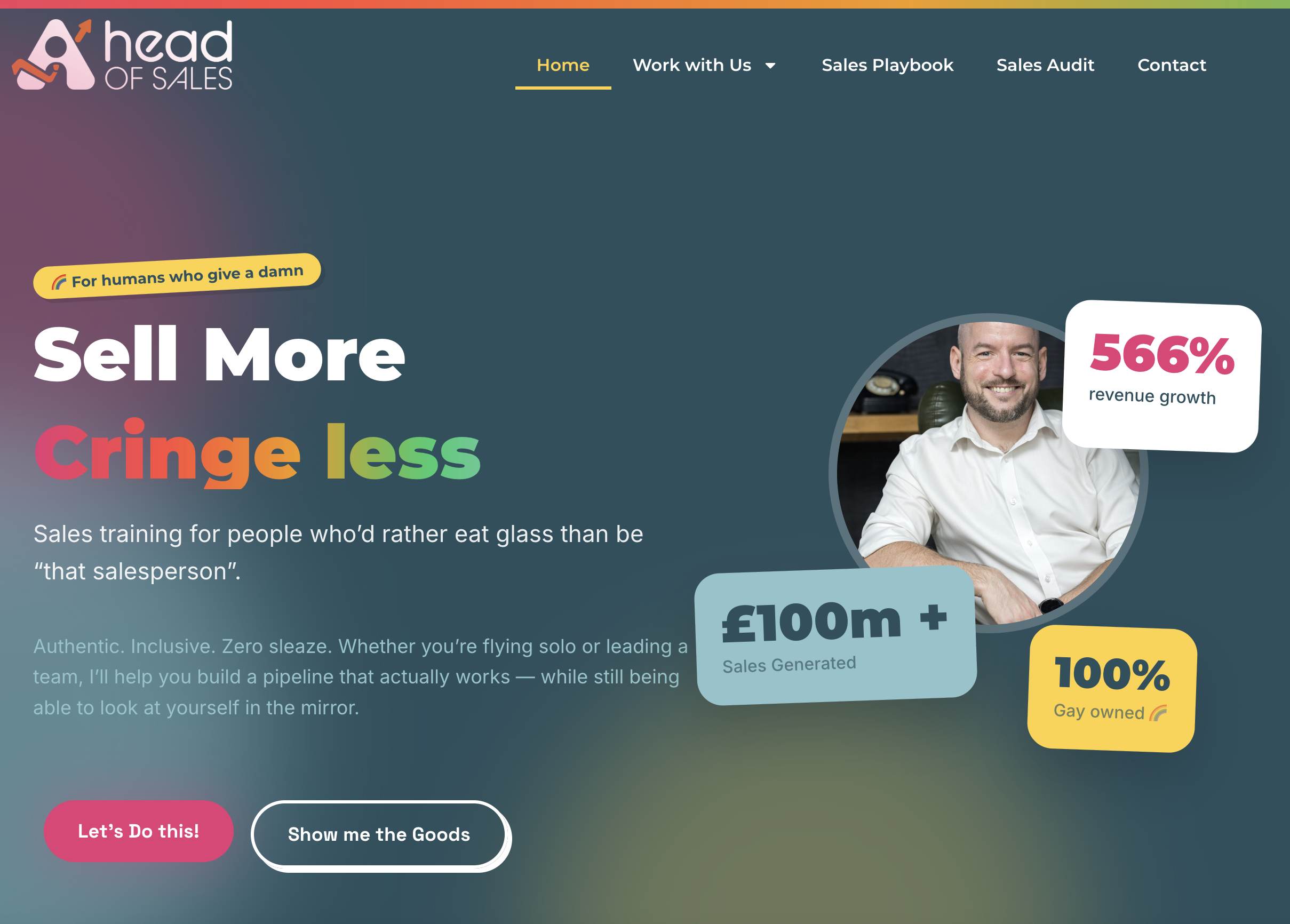
Ahead of Sales combines bespoke 1:1 coaching with traditional training and consultancy to deliver measurable results. Our clients generate at least 50% sales growth annually and ensure their sales teams hit targets every quarter.
We tailor programs to your specific challenges using the data-driven, process-focused methods described in this sales training guide. Whether you need help setting SMART goals, optimizing your sales process, or scaling coaching across your team, our approach adapts to your situation.
Our sales training checklist ensures nothing gets missed during implementation. We provide ongoing support through regular coaching sessions, performance analytics, and accountability check-ins that keep momentum strong.
Packages start from £4,500-£8,500 for businesses with 50-1000 staff seeking growth mindsets and consistent performance improvement. Ready to transform your sales results? Explore our comprehensive sales performance improvement guide and discover how we can accelerate your success.
Frequently Asked Questions
What are the most effective ways to improve sales performance in UK mid-sized businesses?
The five most effective methods are data-driven SMART goal setting, bespoke 1:1 coaching, sales process optimization, incentive alignment, and AI-integrated coaching tools. Companies implementing multiple methods simultaneously see the strongest results, typically achieving 50%+ annual growth. Tailoring approaches to your specific challenges (vague targets, inconsistent performance, long cycles, poor forecasts) increases success probability significantly.
How quickly can I expect to see results from sales performance improvements?
Timelines vary by method and consistency of execution. Data-driven goal setting shows initial improvements within one quarter. Bespoke coaching typically delivers measurable results in two to three quarters. Process optimization requires two to four quarters for full impact. Most businesses see meaningful revenue increases within six months when combining multiple approaches with disciplined implementation and regular measurement.
What budget should UK businesses allocate for sales performance improvement?
Mid-sized UK companies typically invest £10K-£25K annually on comprehensive sales performance programs. Data-driven goal setting costs £2K-5K for setup. Bespoke coaching ranges £4.5K-8.5K depending on team size. Process optimization requires £5K-12K. AI tools cost £3K-8K annually. Start with high-impact, lower-cost methods like goal setting and incentive alignment, then expand as ROI demonstrates value.
How do I choose between different sales improvement strategies?
Match methods to your primary challenges. Vague targets need data-driven goals. Inconsistent rep performance requires bespoke coaching. Long sales cycles demand process optimization. Poor forecast accuracy calls for incentive alignment. Large teams benefit from AI integration. Assess your CRM data quality, management capacity, and budget constraints. Most successful implementations combine multiple complementary approaches rather than relying on single solutions.
Can small businesses benefit from these sales performance improvement methods?
Absolutely. While this article focuses on UK mid-sized businesses with £2M+ revenue, the core principles apply at any scale. Smaller businesses may implement simplified versions with lower investment. Solo service businesses can benefit from sales acceleration packages starting at £2,995. The key is selecting methods matching your resources and growth ambitions rather than attempting enterprise-scale implementations beyond current capacity.
Recommended
- Sales Performance Management: Driving Consistent UK Growth
- How to Scale Sales Team for Consistent UK Business Growth
- Maximise Results with the Sales Training Process UK Guide
- Effective Sales Training Methods for Rapid Growth – Ahead of Sales
- Metodo Market – Metodo Universitario
- Varför företag behöver IT-stöd 2026: 40% högre produktivitet
One Response