
Did you know that businesses with dedicated sales training see up to 50 percent higher net sales per employee? Strong sales teams do not happen by accident. Regular assessment and tailored development are key to keeping your team sharp and competitive. When you focus on building practical skills, tracking progress and fostering real collaboration, you set the stage for long term sales success.
Table of Contents
- Step 1: Assess Current Sales Capabilities And Goals
- Step 2: Design Bespoke Training Programs For Your Team
- Step 3: Deliver Interactive And Practical Sales Training
- Step 4: Integrate 1:1 Coaching And Peer Learning
- Step 5: Evaluate Training Impact And Refine Methods
Quick Summary
| Key Point | Explanation |
|---|---|
| 1. Assess Your Current Sales Capabilities | Conduct a thorough audit of sales metrics and team insights to identify strengths and improvement areas. |
| 2. Design Tailored Training Programs | Create bespoke training that addresses specific skill gaps and aligns with business goals for maximum impact. |
| 3. Implement Interactive Training Methods | Use role plays and real-world simulations to transform theory into practical skills that can be applied immediately. |
| 4. Incorporate Coaching and Peer Learning | Establish mentorship and peer exchange opportunities for shared learning and support among team members. |
| 5. Continuously Evaluate and Refine Training | Set key performance indicators to regularly assess training impact and adapt methods based on feedback and results. |
Step 1: Assess current sales capabilities and goals
Before diving into sales transformation strategies, you need a clear snapshot of where your sales team currently stands. This initial assessment acts as your strategic roadmap for growth and identifies precise opportunities for improvement.
Start by conducting a comprehensive sales performance audit. Pull out your existing sales data and metrics like conversion rates, average deal size, sales cycle length, and current revenue numbers. Look beyond surface level numbers and dig into the nuanced performance indicators that reveal your team’s true potential.
Speak directly with your sales representatives to understand their perspectives. Schedule individual interviews or team discussions where you can uncover insights about their challenges, strengths, and perceived barriers. Ask open ended questions like:
- What processes currently slow down your sales efforts?
- Where do you feel most confident in your sales approach?
- What additional training or resources would help you close more deals?
Next, map out your current sales goals against realistic market expectations. Be brutally honest about whether your targets are achievable given your team’s current capabilities. This means comparing your goals with industry benchmarks and understanding the gap between aspiration and current performance.
Here’s a summary of key elements to evaluate during your sales capability assessment:
| Assessment Area | Metrics & Indicators | Methods of Evaluation |
|---|---|---|
| Sales Performance | Conversion rate Deal size Sales cycle Revenue |
Data audit Benchmark analysis |
| Team Skills | Product knowledge Negotiation ability Customer rapport |
Interviews Self-assessment |
| Process Barriers | Efficiency bottlenecks Technology gaps |
Team discussions Process mapping |
| Goal Alignment | Target achievability Market comparison |
Benchmarking Gap analysis |
Pro Tip: Use standardised assessment frameworks like the Sales Capability Maturity Model to create an objective evaluation of your sales team’s readiness and potential.
Documenting these findings creates a solid foundation for your sales training strategy. By understanding exactly where your team stands today, you can design targeted interventions that drive meaningful growth and performance improvement.
Step 2: Design bespoke training programs for your team
Crafting a truly effective sales training programme means going beyond generic off the shelf solutions. You want a targeted approach that speaks directly to your team’s unique strengths and development needs.
According to the UCL Centre for Behaviour Change, customizing training materials to organisational needs is critical for meaningful learning outcomes. Start by mapping out specific skill gaps identified in your initial assessment. These might include communication techniques, negotiation strategies, customer relationship management or technical product knowledge.
Research from Oxford University’s Department for Continuing Education emphasises the importance of aligning training with precise business goals. Break down your training programme into modular components that can be mixed and matched based on individual and team requirements.
Consider creating different learning pathways for:
- Junior sales representatives needing foundational skills
- Mid level performers looking to enhance strategic selling approaches
- Senior sales professionals wanting advanced leadership development
Pro Tip: Incorporate a blend of learning methods including interactive workshops, online modules, peer mentoring and real world simulation exercises to maximise engagement and knowledge retention.
Ensure your programme includes practical assessment mechanisms that allow you to measure skill progression and training effectiveness. This might involve role play scenarios, quarterly performance reviews or structured feedback sessions that track tangible improvements in sales metrics.
By designing a bespoke training approach tailored specifically to your team’s context, you create a powerful mechanism for continuous professional development and sales performance enhancement.

Step 3: Deliver interactive and practical sales training
Successful sales training goes far beyond passive lectures and theoretical concepts. Your goal is to transform knowledge into actionable skills that your team can immediately apply in real world sales scenarios.
Start by creating immersive learning experiences that simulate actual sales situations. Design role play exercises that mirror your specific industry challenges. For instance, if you sell complex B2B services, construct scenarios that require intricate negotiation techniques and deep product understanding.
Encourage active participation through structured interactive methods:
- Live sales pitch demonstrations
- Peer review and feedback sessions
- Real time problem solving workshops
- Recorded performance analysis
Integrate multimedia and technology to keep engagement high. Use video recordings of successful sales interactions, interactive digital simulations and collaborative online platforms that allow team members to share insights and strategies.
Pro Tip: Record training sessions and create a digital library of best practice examples that your team can reference and learn from continuously.
Focus on practical skill development rather than theoretical knowledge. Each training module should have a clear outcome where participants can demonstrate tangible improvements in their sales approach. This might involve closing mock sales calls, crafting compelling pitch presentations or handling complex customer objections.
Ensure consistent feedback loops where participants receive immediate constructive guidance. Break down complex skills into smaller actionable components and provide multiple opportunities for practice and refinement.
By transforming training from a passive experience to an engaging interactive journey, you create a powerful mechanism for continuous sales skill enhancement.
Step 4: Integrate 1:1 coaching and peer learning
Powerful sales development happens when individual guidance meets collective wisdom. By combining personalised coaching with structured peer learning, you create a dynamic environment where skills multiply exponentially.
Begin by matching experienced sales performers with newer team members through a strategic mentorship programme. Select mentors who not only demonstrate exceptional sales performance but also possess strong communication and teaching capabilities. These relationships should be more than formal assignments they need to feel organic and supportive.
Implement regular one to one coaching sessions where senior team members can provide tailored guidance. These sessions should focus on:
- Analysing individual sales performance
- Identifying specific skill development areas
- Providing personalised strategy recommendations
- Offering emotional support and motivation
Create structured peer learning opportunities that encourage knowledge sharing. This might involve:
- Weekly team roundtable discussions
- Shared success story presentations
- Cross team skill exchange workshops
- Digital collaboration platforms for continuous learning
Pro Tip: Rotate mentorship pairings every six months to expose team members to diverse perspectives and prevent knowledge silos.
Design a transparent feedback mechanism where both mentors and mentees can provide input about the coaching experience. This ensures the programme remains dynamic and responsive to individual and team needs.
Encourage a culture of vulnerability where team members feel safe sharing challenges and seeking guidance. The most powerful learning happens when individuals can openly discuss their struggles and receive constructive support.
By blending personalised coaching with collaborative peer learning, you create a sustainable ecosystem of continuous professional growth that drives remarkable sales performance.
Step 5: Evaluate training impact and refine methods
True sales performance improvement requires more than just implementing training programmes. You need a systematic approach to measuring effectiveness and continuously adapting your methods based on tangible results.
Establish clear key performance indicators from the outset. These metrics should go beyond traditional sales numbers and capture nuanced skill development. Track indicators like:
- Individual sales technique improvement
- Customer interaction quality
- Proposal conversion rates
- Average deal size progression
- Time to close sales cycles
Implement a multi layered assessment strategy that combines quantitative data with qualitative feedback. Conduct regular performance reviews where team members can share their learning experiences and identify specific areas where training has made a meaningful difference.
Create structured feedback mechanisms that allow honest and constructive input. Use anonymous surveys, individual coaching debriefs and team roundtable discussions to gather comprehensive insights about training effectiveness.
Pro Tip: Develop a rolling evaluation process where training methods are continuously refined rather than waiting for annual reviews.
Analyse performance data at both individual and team levels. Look for patterns that indicate skill transfer and identify any persistent skill gaps that might require additional targeted training interventions.
Remember that evaluation is not about criticism but about creating a culture of continuous improvement. Celebrate progress moments and use data to motivate your team towards higher performance standards.
By adopting a rigorous yet supportive approach to training evaluation, you transform sales development from a static programme into a dynamic growth engine for your entire organisation.
Unlock Rapid Sales Growth with Bespoke Training and Coaching
If you have just read about how effective sales training methods shape rapid growth, you understand the challenge of turning insights into action. This article highlights the need for personalised coaching, interactive learning and continuous evaluation to overcome barriers like skill gaps, process inefficiencies and misaligned goals. These pain points keep sales teams from hitting their targets every quarter and stall revenue growth.
Our revolutionary approach at Ahead of Sales directly addresses these challenges by combining tailored 1:1 coaching with traditional and consultancy led training programmes. We design bespoke packages for businesses with 50 to 1000 staff aiming for at least 50% sales growth each year. Whether your team needs training for foundational skills or advanced leadership development, our solutions create measurable sales success by applying the core principles discussed in your latest read.
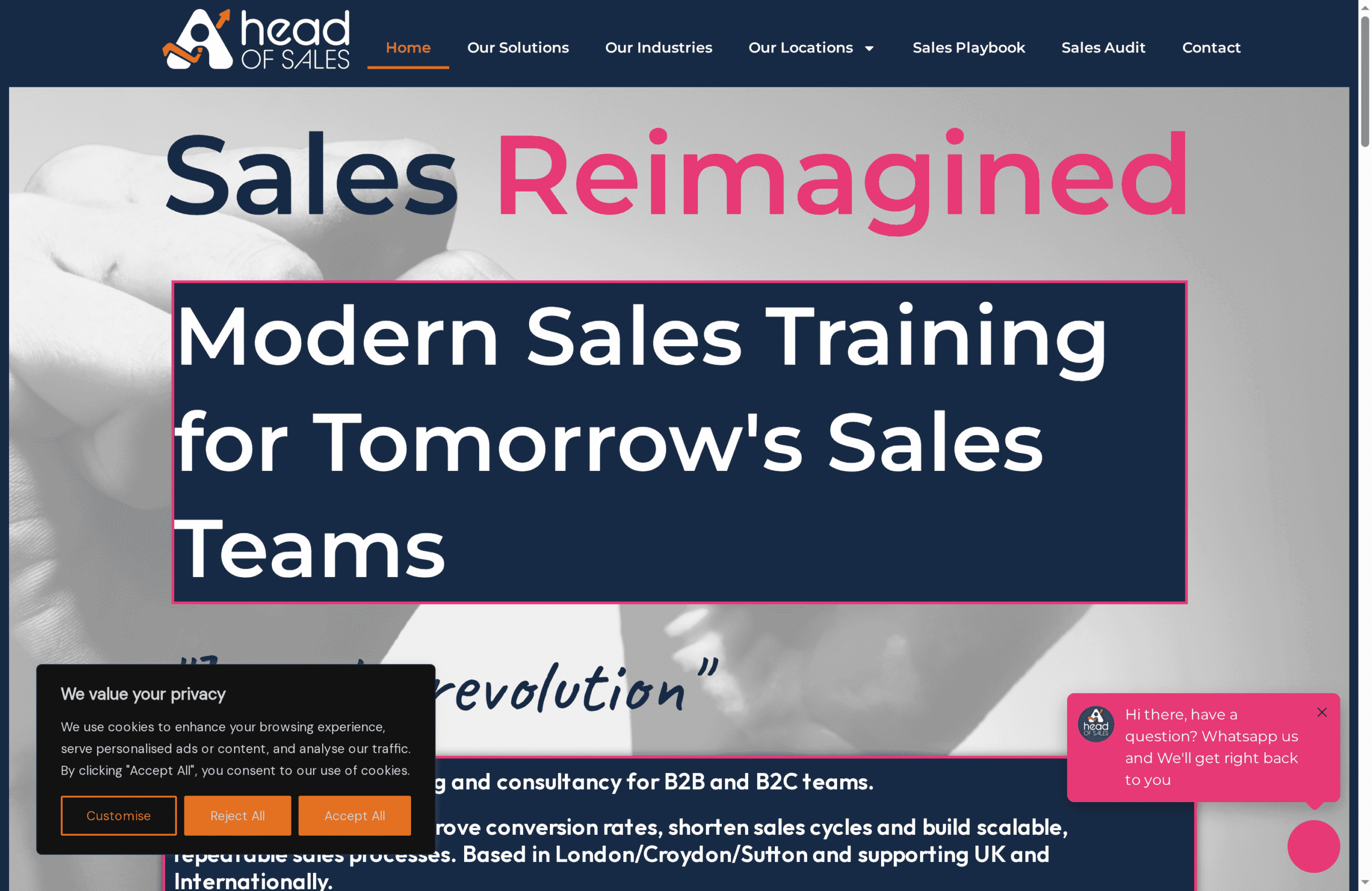
Take control of your sales transformation journey today by exploring our sales training and consultancy options. With packages starting from £4,500, the time to act is now if you want to stop losing deals due to gaps in skills or process barriers. Discover how to turn interactive, practical sales training and personalised coaching into a powerful driver of growth. Visit Ahead of Sales to find out more and book your first consultation.
Frequently Asked Questions
How do I assess my sales team’s current capabilities before starting training?
Start by conducting a comprehensive sales performance audit that includes metrics like conversion rates and sales cycle length. Schedule interviews with your sales representatives to gather insights about their strengths and challenges, ensuring you have a thorough understanding of your team’s current state.
What elements should be included in a bespoke sales training program?
A bespoke sales training program should focus on specific skill gaps, such as negotiation techniques and customer relationship management. Break down the training into modular components tailored to different experience levels, ensuring that both junior and senior sales members can benefit from targeted learning pathways.
What practical methods can make sales training more interactive?
Incorporate role play exercises, live demonstrations, and real-time problem-solving workshops to create immersive learning experiences. Engage your team by using multimedia elements, such as video recordings of successful sales pitches or collaborative online platforms for sharing strategies.
How can I integrate peer learning into my sales training approach?
Establish mentorship programs that pair experienced sales staff with newer employees for regular coaching sessions. Organize structured peer learning opportunities, like roundtable discussions and skill exchange workshops, to promote knowledge sharing and collective growth.
What key performance indicators should I track to evaluate sales training effectiveness?
Measure indicators such as individual sales technique improvement, customer interaction quality, and average deal size progression. Establish a rolling evaluation process to continuously assess these metrics, aiming to identify specific areas for improvement within 30–60 days of implementing training.
How can I refine my sales training methods based on evaluation results?
Use a multi-layered assessment strategy that combines quantitative sales metrics with qualitative feedback from team members. Regularly analyze performance data to identify skill gaps and adjust your training approaches, creating a culture of continuous learning and improvement.
Recommended
- Transform42 New
- Owner-Led AI Adoption Tips for Small Businesses — Average Robot
2 Responses