
Most british sales leaders report that poorly structured meetings waste as much as 31 percent of valuable selling time each quarter. When your team must consistently hit ambitious targets, every meeting matters. For mid-sized UK tech companies, a solid process for setting objectives, crafting focused agendas, and driving accountability can transform standard sales conversations into growth engines. This guide reveals proven steps to help you sharpen your meetings and achieve stronger, more predictable results.
Table of Contents
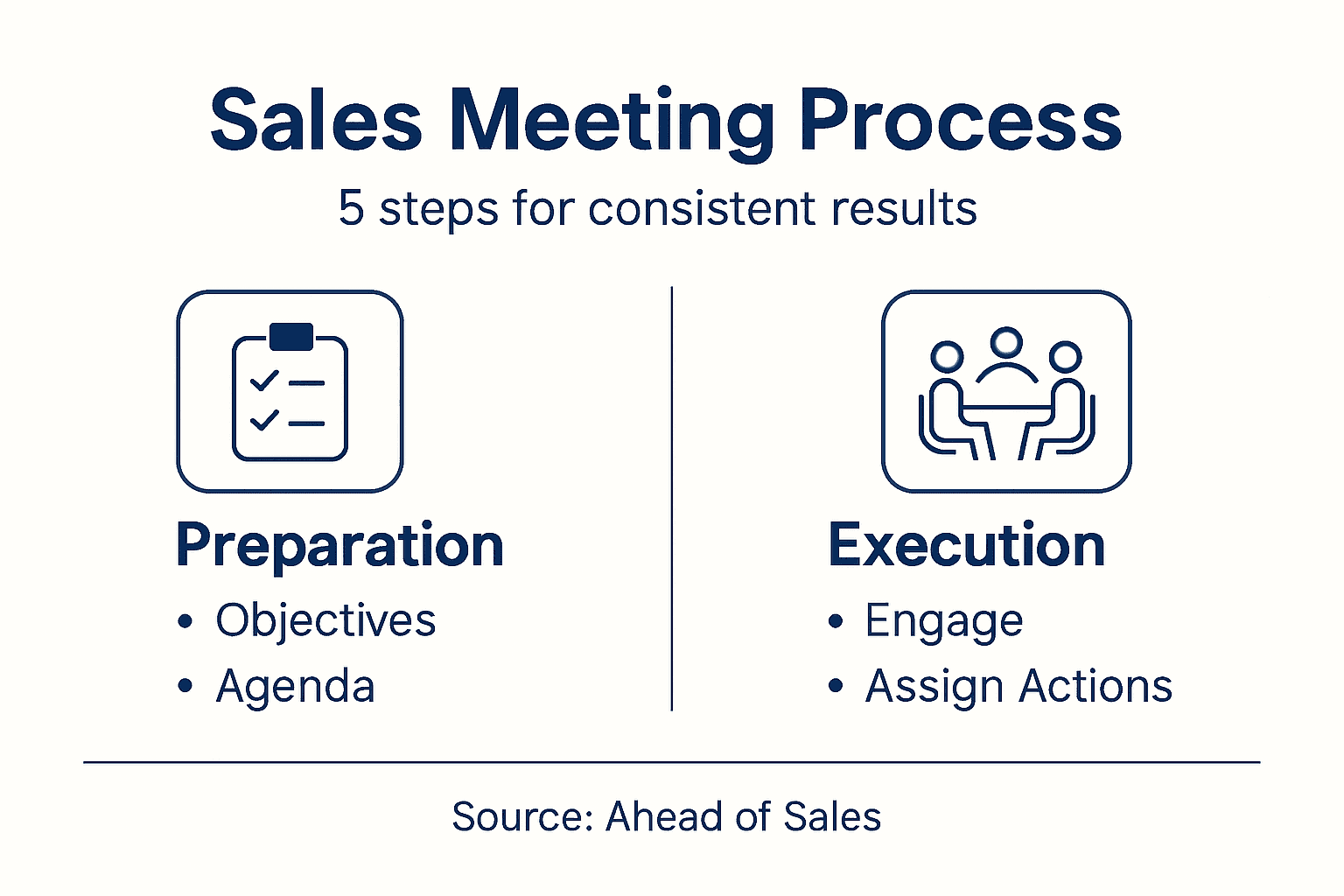
- Step 1: Define Meeting Objectives And Required Outcomes
- Step 2: Create Focused Agendas And Prepare Actionable Materials
- Step 3: Engage Participants And Lead Structured Discussions
- Step 4: Assign Actions And Confirm Accountability
- Step 5: Track Progress And Evaluate Meeting Effectiveness
Quick Summary
| Key Insight | Explanation |
|---|---|
| 1. Define clear meeting objectives | Set specific goals to transform discussions into actionable outcomes. This ensures meetings are targeted and efficient. |
| 2. Prepare structured agendas | Craft agendas that focus on key decisions and include time allocations to keep discussions productive and on track. |
| 3. Engage participants effectively | Create an inclusive environment that encourages contributions from all participants for balanced discussions. |
| 4. Assign clear actions and accountability | Clarify who is responsible for each task, specifying what needs to be done and when, to ensure follow-through. |
| 5. Track progress and evaluate effectiveness | Implement a post-meeting review to assess outcomes and improve future meeting productivity through regular updates and feedback. |
Step 1: Define meeting objectives and required outcomes
Before diving into any sales meeting, you need a crystal clear understanding of what you want to achieve. Setting precise objectives transforms a generic discussion into a strategic conversation that drives real business outcomes. Defining clear meeting goals helps you focus your energy and guide participants towards meaningful results.
Start by asking yourself three critical questions: What specific product or decision am I aiming to generate? What knowledge or understanding do I want participants to walk away with? What concrete actions must emerge from this meeting? Break down your objectives into measurable, specific targets. For instance, instead of saying “discuss sales strategy,” articulate “develop a targeted outreach plan for our top three prospect segments with assigned responsibilities and a 30-day implementation timeline.” This approach transforms vague intentions into actionable commitments. Effective meetings require lucid objectives that respect everyone’s time and organisational resources.
Your meeting objectives should create a roadmap that guides discussion, prevents tangential conversations, and ensures every minute counts. Think of these objectives as your meeting’s north star – they keep everyone aligned, focused, and moving in the same direction.
Top Tip: Always document your meeting objectives in writing and share them with participants before the meeting to set clear expectations and allow everyone to prepare effectively.
Here is a summary of essential features that make sales meetings effective:
| Key Element | Purpose | Business Impact |
|---|---|---|
| Clearly defined goals | Directs conversation focus | Increases actionable outcomes |
| Structured agenda | Guides topic progression | Prevents wasted meeting time |
| Actionable materials | Enables informed decisions | Enhances productivity |
| Explicit accountability | Clarifies ownership of actions | Drives commitment to results |
| Progress tracking | Monitors follow-up effectiveness | Supports continuous improvement |
Step 2: Create focused agendas and prepare actionable materials
Transforming your sales meeting from a passive discussion to a strategic planning session requires meticulous agenda preparation. Crafting strategic meeting questions helps you target key issues and guide participant involvement effectively, ensuring your meeting delivers tangible results.
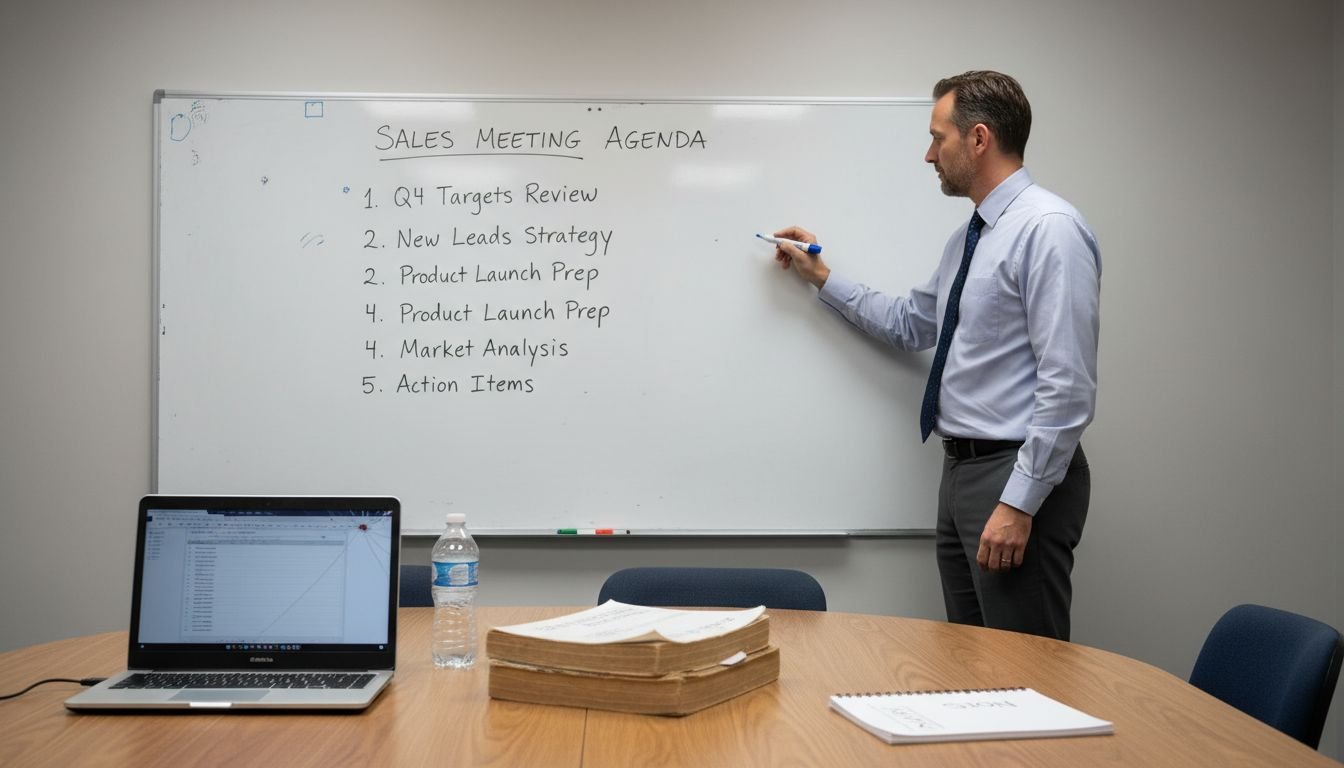
Begin by identifying the core strategic questions you need to resolve. Your agenda should read like a roadmap of critical decisions rather than a mundane list of topics. For each agenda item, clearly articulate the desired outcome. What specific decision needs to be made? What information must be shared? What actions will participants commit to? Learning agendas prioritise research questions that systematically address organisational goals. Include time allocations for each discussion point to maintain focus and prevent meandering conversations.
Prepare supporting materials in advance. This might include market research reports, sales performance dashboards, competitor analysis, or customer insight summaries. These documents should be concise, visually clear, and directly aligned with your meeting objectives. Send these materials to participants at least 48 hours before the meeting, allowing everyone time to review and come prepared with informed perspectives.
Practical Recommendation: Create a one-page summary document that outlines meeting objectives, key discussion points, expected outcomes, and pre-reading materials to set clear expectations and maximise meeting productivity.
Step 3: Engage participants and lead structured discussions
Successful sales meetings demand more than just talking they require strategic facilitation that keeps everyone focused and contributes meaningful insights. Managing group discussions effectively means creating an inclusive environment where every participant feels valued and motivated to contribute.
Start by establishing clear ground rules for interaction. This means setting expectations about active listening respect for different perspectives and constructive dialogue. Use targeted questioning techniques to draw out insights from quieter team members while preventing dominant personalities from monopolising the conversation. Guided discussion strategies can help you scaffold conversations and ensure balanced participation. Consider using techniques like round robin discussions where each participant gets an equal opportunity to share their perspective or employing sentence stems to support more hesitant contributors.
As the meeting leader your role is to act as a conductor not a performer. Navigate the discussion with gentle guidance redirecting conversations that drift off track while remaining open to unexpected but valuable insights. Pay attention to non verbal cues watch for signs of disengagement and be prepared to re energise the room with strategic interventions like brief breakout discussions or interactive problem solving exercises.
Practical Recommendation: Prepare a set of strategic questions in advance and use them as conversation anchors to maintain discussion momentum and ensure comprehensive exploration of key topics.
Step 4: Assign actions and confirm accountability
The most critical moment of any sales meeting happens in its final minutes when potential momentum transforms into concrete commitments. Establishing organisational accountability requires precision deliberation and clear role definition to ensure every discussion translates into actionable progress.
During the meeting’s closing segment adopt a systematic approach to action assignment. For each identified task clearly articulate three essential elements who is responsible what specifically needs to be completed and when the deadline falls. Avoid vague statements like “someone will handle this” instead use precise language such as “Sarah will draft the client proposal by next Thursday” or “Mark will contact our top three prospects before month end”. Compassionate accountability techniques suggest creating an environment where team members feel supported yet understand their commitments are meaningful and expected to be fulfilled.
Implement a visual tracking mechanism to reinforce accountability. This might involve creating a shared spreadsheet documenting each action item its owner and completion status or using project management software that allows real time updates. Encourage team members to provide periodic progress updates ensuring transparency and maintaining momentum beyond the initial meeting.
Practical Recommendation: Conclude each meeting by verbally confirming actions with each responsible team member and immediately distributing a written summary to create immediate clarity and commitment.
Step 5: Track progress and evaluate meeting effectiveness
Meeting success is not a one time event but an ongoing process of continuous improvement and strategic reflection. Measuring meeting effectiveness requires a systematic approach that goes beyond surface level observations and digs into meaningful performance indicators.
Implement a structured post meeting review process that objectively assesses your meeting’s impact. This involves collecting quantitative and qualitative data about action item completion rates team engagement levels and tangible outcomes generated. Effective team meeting evaluation emphasises the importance of explicit debriefing sessions that examine what worked well and where improvements can be made. Consider creating a standardised feedback template that team members complete within 24 hours of the meeting capturing insights about discussion quality decision making efficiency and overall productivity.
Establish a rhythm of regular progress tracking where assigned actions are monitored and discussed in subsequent meetings. Use visual dashboards or shared collaboration tools that allow real time updates and transparent progress monitoring. This approach not only keeps everyone accountable but also provides a clear line of sight into team performance and helps identify potential bottlenecks or support requirements early.
Practical Recommendation: Schedule a brief monthly review to analyse meeting effectiveness trends identify recurring challenges and celebrate team achievements that emerged from your structured meeting approach.
Consider these methods for tracking progress and boosting meeting outcomes:
| Tracking Method | Description | Value to Team |
|---|---|---|
| Feedback templates | Collects post-meeting insights | Reveals improvement opportunities |
| Collaboration tools | Allows real-time updates | Enhances transparency |
| Visual dashboards | Displays progress at a glance | Makes achievements visible |
| Scheduled reviews | Analyses trends monthly | Reinforces ongoing accountability |
Unlock Consistent Sales Success With Strategic Meeting Excellence
Mastering an effective sales meeting process is often the missing key to driving reliable business growth. This article highlights how setting clear objectives, crafting focused agendas, and holding teams accountable directly impacts action and results. If you struggle with meetings that lack direction, waste time, or fail to convert conversations into sales wins, you are not alone. Imagine transforming every meeting into a powerful engine for progress that aligns your sales team and accelerates sales growth quarter after quarter.
At Ahead of Sales, we understand these challenges and offer bespoke 1:1 coaching combined with proven training and consultancy designed for businesses hungry for breakthrough results. Our approach focuses on applying strategic meeting frameworks and sales playbook techniques to help your team consistently hit targets and exceed expectations. Explore our insights in Sales Strategy Archives – Ahead of Sales and practical tools within the Sales Playbook Archives – Ahead of Sales to begin reshaping your sales conversations.
Ready to move beyond ineffective meetings and create a reliable sales meeting process that drives tangible outcomes? Visit Ahead of Sales now to discover tailored solutions that deliver at least 50 percent sales growth every year. Take control of your sales success today and watch your team thrive with meetings that truly matter.
Frequently Asked Questions
How can I define clear meeting objectives for my sales meetings?
To define clear meeting objectives, ask yourself what specific outcomes you want from the meeting. Break these objectives into measurable targets, such as creating an actionable outreach plan within 30 days.
What should I include in an agenda for a sales meeting?
Include key strategic questions, specific desired outcomes for each item, and time allocations to maintain focus. Prepare a one-page summary document that outlines these elements to enhance productivity.
How do I engage participants during a sales meeting?
Engage participants by establishing ground rules for respectful interaction and using targeted questions to encourage contributions from everyone. Consider implementing round robin discussions to ensure balanced participation.
What process should I follow to assign actions and ensure accountability?
During the meeting’s conclusion, clearly assign tasks by stating who is responsible, what needs doing, and the deadline for completion. Document each action item and distribute a written summary immediately after the meeting to reinforce accountability.
How can I evaluate the effectiveness of my sales meetings?
Evaluate effectiveness by implementing a post-meeting review process that collects feedback on action completion rates and engagement levels. Schedule a brief monthly review to analyse trends and identify areas for improvement.
What methods can I use to track progress after meetings?
Utilise feedback templates to gather insights, and collaboration tools for real-time updates. Additionally, set up visual dashboards to display progress clearly, helping to maintain transparency and accountability.
Recommended
- 7 Essential Sales Team Training Topics for Growth – Ahead of Sales
- How to Conduct Sales Training for Consistent Growth
- 7 Essential Steps for a Winning Sales Training Checklist – Ahead of Sales
- Sales Team Management Workflow for Sustainable Growth – Ahead of Sales
- Mastering Public Speaking for Leaders: A Step-by-Step Guide|CS