
Over 60 percent of british companies say that inconsistent sales training slows down their revenue growth. In today’s fast-moving market, simply keeping up is not enough. Businesses need a training approach that sticks and leads to lasting results. This clear guide will help you understand what makes consistent sales training so powerful and how it can drive long-term success for your british sales teams.
Table of Contents
- Consistent Sales Training Explained Clearly
- Types Of Sales Training Approaches
- How Continuous Training Improves Results
- Financial Impacts And Missed Opportunities
- Common Pitfalls Of Irregular Training
Key Takeaways
| Point | Details |
|---|---|
| Ongoing Learning is Essential | Continuous sales training transforms skill development from a one-time event into an integrated part of daily workflows, crucial for adapting to market changes. |
| Diverse Training Approaches Enhance Effectiveness | Employing varied learning modalities such as online modules and peer-to-peer sessions caters to different learning styles and improves engagement. |
| Financial Risks of Inadequate Training | Neglecting consistent training can lead to increased costs from poor performance, higher staff turnover, and missed revenue opportunities. |
| Combatting the Pitfalls of Irregular Training | Consistency in training prevents knowledge degradation and misalignment with sales challenges, fostering a more resilient and capable sales team. |
Consistent Sales Training Explained Clearly
Successful sales organisations understand that training is not a one-time event but a continuous journey of skill development and adaptation. Modern sales training goes far beyond traditional classroom lectures, focusing instead on creating dynamic learning environments where representatives can continuously improve their capabilities.
The core philosophy of consistent sales training revolves around embedding learning directly into daily workflow. This means transforming training from a sporadic intervention into a seamless, ongoing process tailored to individual seller needs. Sales professionals require adaptive learning strategies that respond quickly to changing market dynamics, customer preferences, and technological advancements. By integrating regular skill assessment, personalised coaching, and real-time feedback mechanisms, organisations can create a robust learning ecosystem that drives consistent performance improvement.
Effective sales training programmes typically incorporate multiple learning modalities to address diverse learning preferences. These might include:
- Interactive online modules
- Peer-to-peer knowledge sharing sessions
- Scenario-based role-playing exercises
- Microlearning bite-sized content
- Performance tracking and analytics
Companies committed to sustained growth recognise that investing in continuous sales training is not an expense but a strategic investment. By nurturing a culture of continuous learning, businesses can significantly reduce staff turnover, accelerate new hire productivity, and maintain a competitive edge in increasingly complex sales landscapes.
Types Of Sales Training Approaches
Sales training has evolved dramatically, moving beyond traditional one-size-fits-all approaches to more nuanced and personalised methodologies. Modern sales training delivery methods now encompass a diverse range of techniques designed to address the unique learning needs of sales professionals across different skill levels and contexts.

The contemporary sales training landscape includes several key approaches. Instructor-led training remains foundational, providing structured learning environments where experienced professionals can share direct insights. Virtual instructor-led training has gained significant traction, enabling organisations to deliver consistent training experiences across geographically dispersed teams. E-learning platforms offer flexible, self-paced learning modules that allow sales representatives to develop skills at their own convenience, while blended learning combines multiple modalities to create comprehensive educational experiences.
Innovative training methodologies continue to emerge, reflecting the dynamic nature of sales environments. These include:
- Role-playing scenarios that simulate real-world sales interactions
- Microlearning techniques delivering bite-sized, focused learning content
- AI-powered coaching platforms providing personalised skill development recommendations
- Peer-to-peer learning networks that facilitate knowledge sharing
- Performance tracking systems that link training directly to measurable outcomes
These diverse approaches recognise that effective sales training is not about delivering information, but about creating transformative learning experiences. By leveraging comprehensive sales training methodologies, organisations can develop adaptable, skilled sales teams capable of navigating complex customer interactions and driving sustainable business growth.
How Continuous Training Improves Results
Continuous sales training represents a transformative approach to professional development, moving far beyond traditional episodic learning models. Embedding learning into daily workflow has become crucial for organisations seeking to maintain competitive edge and drive sustainable performance improvements.
The most significant impact of continuous training lies in its ability to adapt rapidly to changing market dynamics. Sales representatives who engage in ongoing skill development demonstrate markedly higher performance levels, with improved ability to navigate complex customer interactions, understand emerging technologies, and respond to shifting buyer behaviours. This adaptive learning approach allows organisations to create a more resilient and agile sales workforce, capable of responding to unexpected challenges and seizing emerging opportunities.
Key benefits of continuous training include:
-
Faster onboarding for new team members
-
Reduced staff turnover through enhanced skill development
-
Increased sales productivity by keeping skills current
-
Personalised learning pathways tailored to individual performance gaps
-
Real-time performance tracking and immediate skill refinement
Ultimately, continuous training is not merely an educational strategy but a fundamental business investment. By creating a culture of perpetual learning and development, organisations can transform their sales teams from static groups of employees into dynamic, high-performing units capable of consistently delivering exceptional results and driving sustainable business growth.
Financial Impacts And Missed Opportunities
The financial consequences of inadequate sales training extend far beyond simple skill deficiencies. Organisations experiencing poor learning strategies encounter substantial hidden costs that can dramatically erode profit margins and competitive positioning. These costs manifest through reduced sales performance, increased staff turnover, and diminished organisational adaptability.
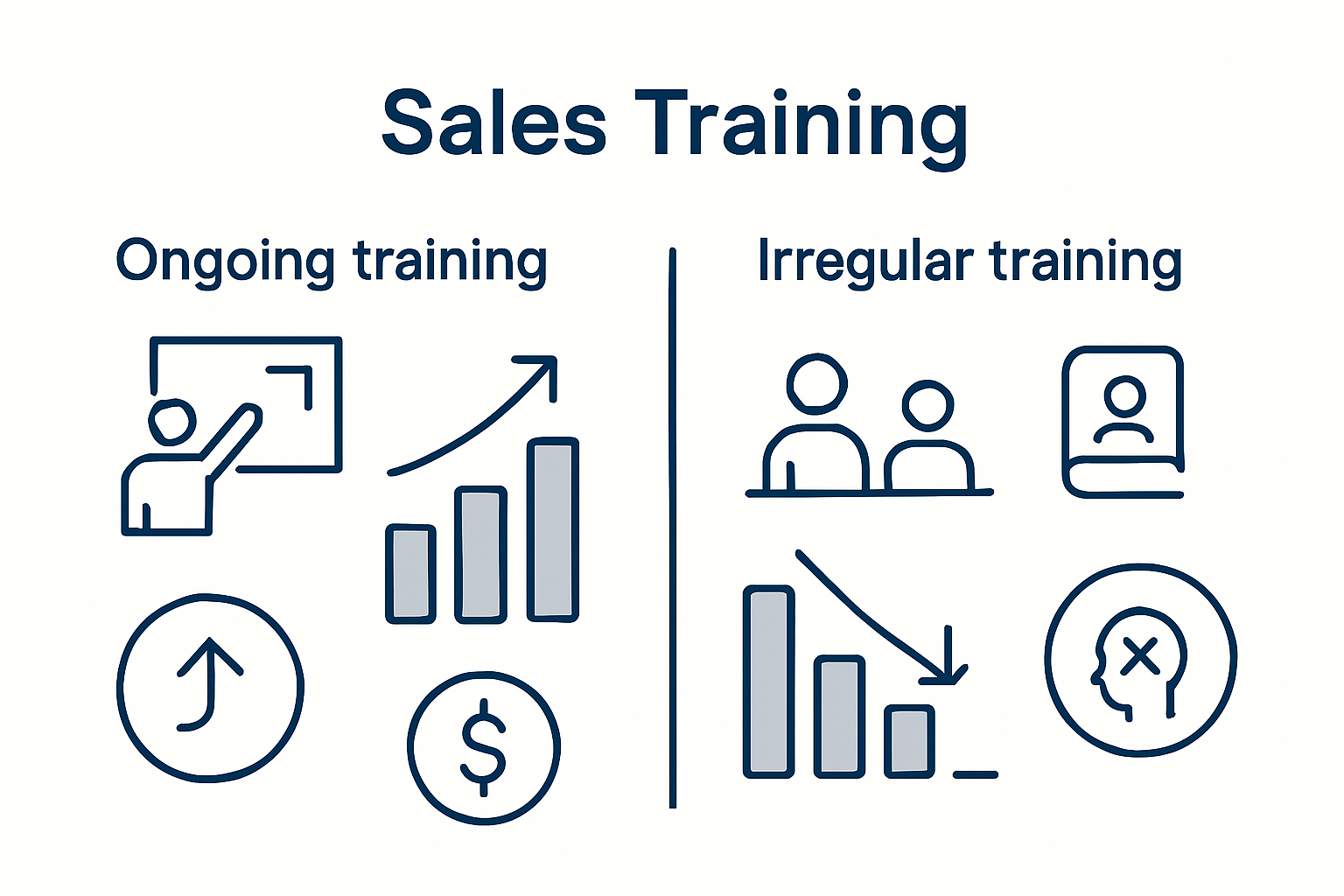
Missed training opportunities create a cascading effect of financial challenges. Sales teams without consistent skill development experience longer ramp-up periods, lower conversion rates, and reduced customer engagement. The economic impact is significant: companies with ineffective training programmes can lose up to 20-30% of their potential revenue through decreased sales productivity, missed opportunities, and reduced customer retention.
Key financial risks of neglecting continuous sales training include:
- Prolonged onboarding leading to delayed revenue generation
- Higher recruitment costs from increased staff turnover
- Reduced sales team efficiency and decreased market responsiveness
- Lower customer satisfaction resulting in diminished repeat business
- Competitive disadvantage as skilled talent migrates to more development-focused organisations
Strategic investment in comprehensive sales training is not an expense but a critical financial strategy. By prioritising continuous learning and skill development, organisations can transform potential financial losses into sustainable growth opportunities, creating a robust and adaptable sales ecosystem that consistently delivers exceptional economic returns.
Common Pitfalls Of Irregular Training
Sales training inconsistency represents a critical vulnerability for organisations seeking sustainable growth. Traditional training approaches that overwhelm sales representatives frequently create more problems than solutions, leaving teams ill-equipped to navigate complex modern sales environments.
Irregular training programmes generate multiple systemic challenges that undermine organisational performance. Sales teams subjected to sporadic, disconnected learning experiences struggle with knowledge retention, skill application, and adaptive thinking. These fragmented approaches result in significant performance gaps, where critical skills become outdated or forgotten before they can be meaningfully integrated into daily sales practices.
The most prevalent pitfalls of inconsistent training include:
- Information overload during infrequent training sessions
- Skill degradation between sporadic learning interventions
- Reduced employee engagement with learning materials
- Inability to track genuine skill progression
- Misalignment between training content and actual sales challenges
Successful organisations understand that effective sales training is not about occasional intensive workshops, but creating a continuous, adaptive learning environment. By recognising and addressing these common pitfalls, businesses can transform their approach from reactive, disconnected training to a strategic, integrated skill development ecosystem that consistently drives performance and organisational resilience.
Unlock Sustained Growth with Consistent Sales Training
Struggling with irregular sales training that leaves your team underprepared and sales targets unmet This article highlights the critical need for continuous, tailored learning to boost performance and secure lasting growth. Many businesses face challenges such as prolonged onboarding, skill degradation and missed revenue opportunities. To overcome these hurdles Ahead of Sales offers bespoke 1:1 coaching paired with proven traditional training methods designed to deliver rapid, measurable improvements. Our solutions are perfect for companies embracing a growth mindset and aiming for at least 50 percent sales increase every year.
Explore practical strategies in our Sales Strategy Archives – Ahead of Sales to see how integrated training creates a culture of continuous learning. When you partner with us at Ahead of Sales you gain access to tailored packages that ensure your sales teams not only hit targets every quarter but also excel in changing markets. Take the first step towards transforming your sales approach and securing sustainable success by visiting Ahead of Sales today.
Frequently Asked Questions
What is consistent sales training?
Consistent sales training is an ongoing, embedded approach to skill development within sales organisations, focusing on continuous improvement rather than one-time sessions.
How does continuous training impact sales performance?
Continuous training enables sales representatives to quickly adapt to market changes and enhances their skills, leading to improved performance and increased sales productivity.
What are the benefits of integrating training into daily work?
Embedding training into daily work fosters real-time skill development, reduces onboarding time, and allows for immediate feedback and performance tracking.
What are common pitfalls of irregular sales training?
Irregular sales training can lead to information overload, skill degradation, reduced employee engagement, and a misalignment between training content and actual sales challenges.
Recommended
- Complete Guide to the Role of Ongoing Sales Training – Ahead of Sales
- Sales Training Matters: Complete Guide for Growth – Ahead of Sales
- How Sales Training Works: Complete Step-by-Step Guide – Ahead of Sales
- How to Conduct Sales Training for Consistent Growth
- Effective Training for Non-Food Staff in 2025: A Guide for Canadian Businesses – Probe IT
- Understanding the Importance of Continuous Learning – My WordPress
- How to Align Marketing and Sales for Predictable Growth
One Response